One of the most common questions business owners ask is, “How do I know if my website is working?”
It’s a fair question, but it’s also surprisingly difficult to answer without first understanding what the website is supposed to accomplish.
I’ve seen business owners decide their website isn’t working when it actually is. I’ve also seen websites that look incredible on the surface but fail to accomplish their purpose.
The reality is that a successful website isn’t defined by how it looks. It’s defined by whether it helps your business achieve a specific goal.
Start With the Purpose of the Website
The first thing I want to know when evaluating a website is why it exists.
Different websites have different jobs.
- If your website exists to generate leads, I want to know how many leads it generates each month and whether visitors have clear opportunities to enter your sales funnel.
- If your website exists to establish credibility, I want to know whether your content answers important questions, demonstrates your expertise, and includes case studies or examples of your work.
- If you sell products online, I want to know how many orders you receive, how many products the average customer buys, and whether visitors can easily explore related products.
Without understanding the website’s purpose, it’s impossible to accurately determine whether it’s performing well.

A Website Can Look Successful Without Being Successful
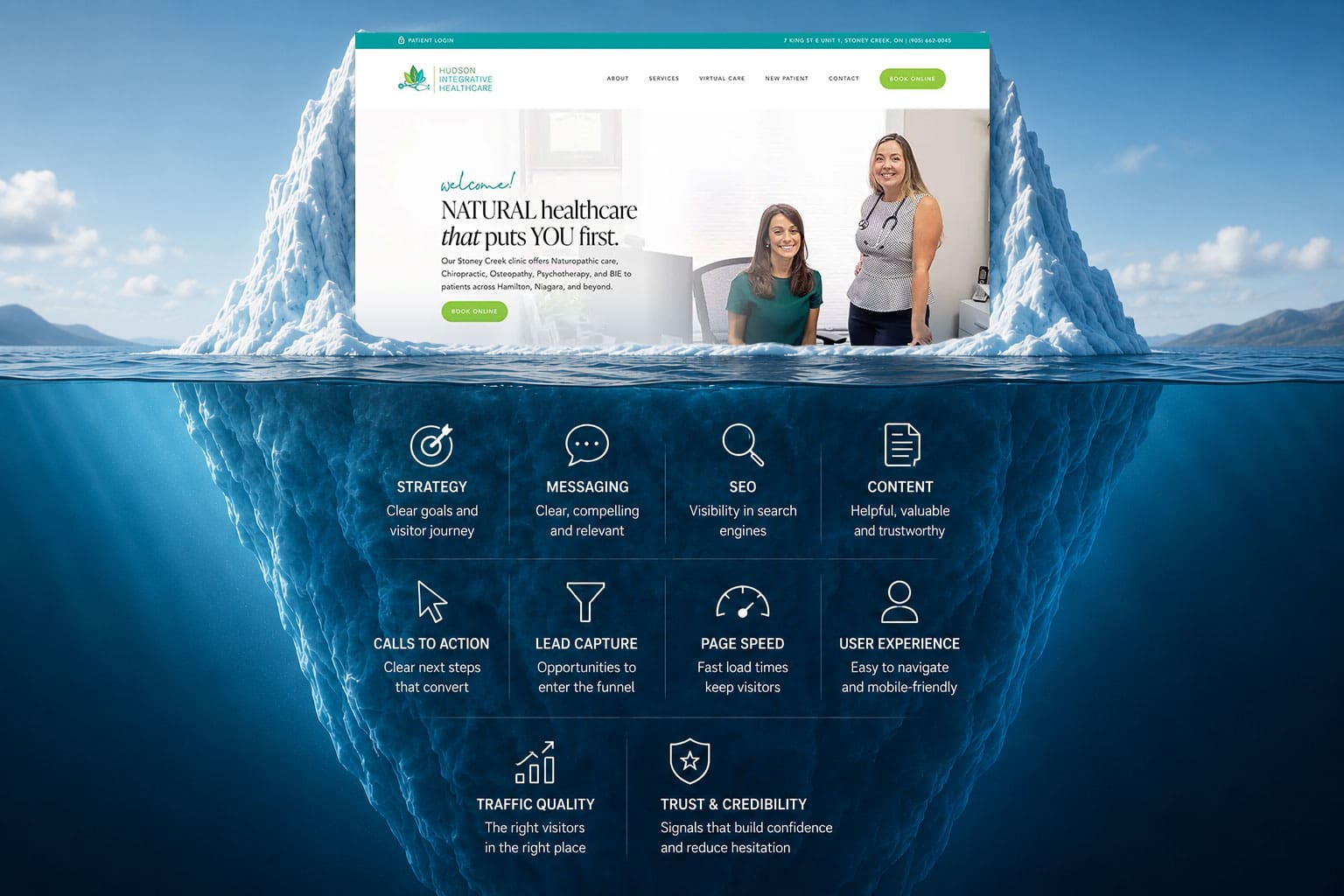
One of the most important lessons I’ve learned is that a website can appear successful while quietly failing.
I worked with a client whose website looked great. The photography was professional. The design was polished. There were thoughtful visual details throughout the site. Most people would have looked at it and assumed it was effective.
That assumption fell apart the moment you started using it.
- There was no clear visitor strategy.
- Visitors were presented with too many choices.
- Important pages lacked even basic SEO optimization.
- The content wasn’t written for the web.
- The calls to action were vague.
- There was no meaningful way to capture visitors who weren’t ready to book immediately.
From a visual standpoint, the website looked finished. From a business standpoint, it wasn’t doing its job.
Good Design Matters, But Strategy Matters More
Design absolutely matters.
Professional design builds trust. It helps establish credibility. It influences how visitors feel about your business.
But design is only effective when it supports a larger strategy.
I’ve seen businesses invest heavily in visual design, custom animations, and trendy effects while neglecting the fundamentals that actually help visitors make decisions.
Fancy animations are a good example. They often look impressive the first time you see them. In most cases, though, they don’t improve the visitor experience in any meaningful way. Sometimes they even make the experience worse by slowing down the website or distracting visitors from important information.
A website should be designed to help visitors accomplish something. Every design choice should support that objective.
Don’t Judge the Entire Website Based on One Outcome
One mistake I see repeatedly is business owners developing tunnel vision.
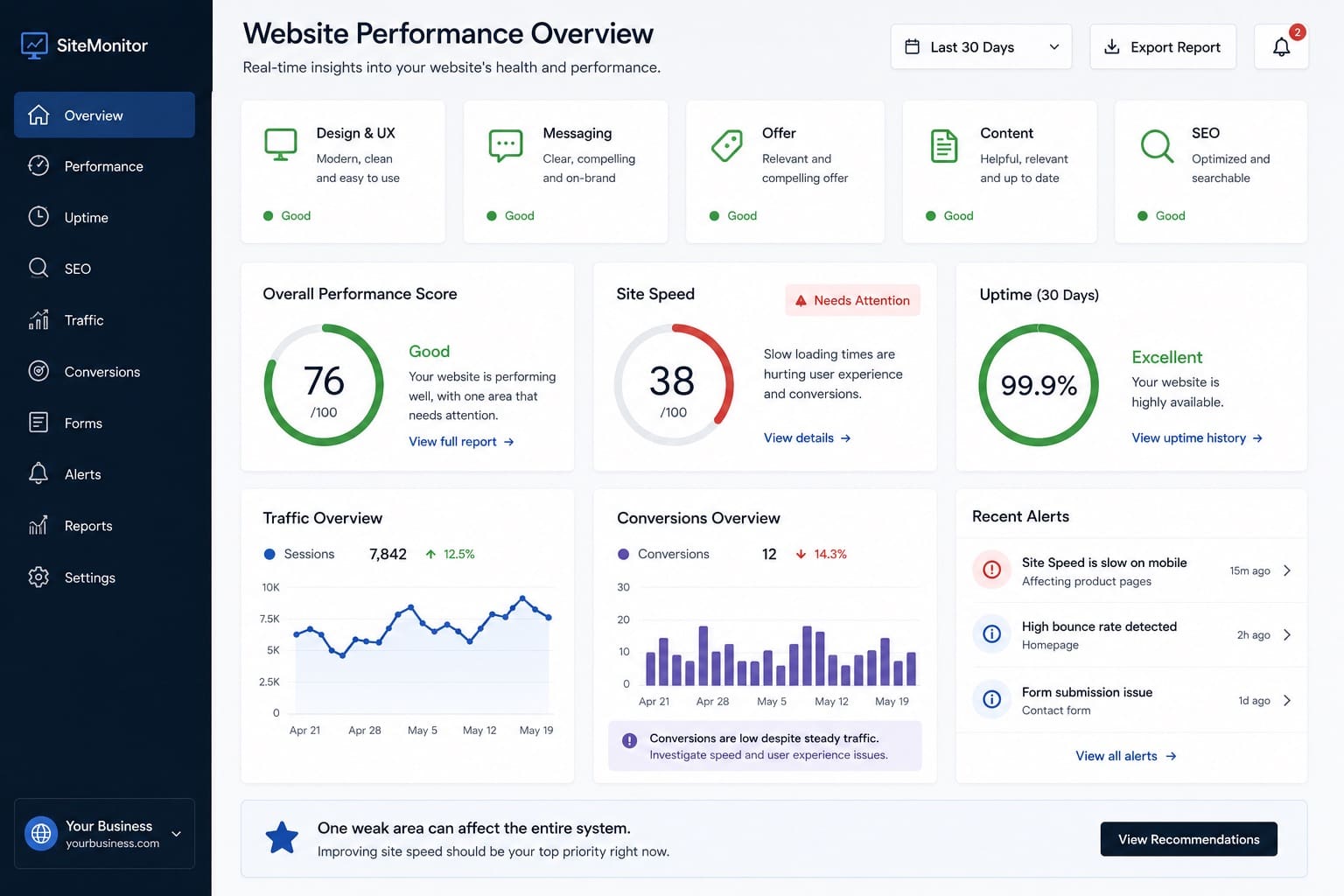
They focus on a single outcome, such as lead generation, and use that result to judge the entire website.
For example, a business owner might have:
- Strong messaging
- A compelling offer
- Professional design
- Helpful content
- Clear calls to action
Yet the website still isn’t generating leads.
At that point, many people conclude that the entire website isn’t working.
In reality, there may only be one missing piece. Perhaps the website is loading too slowly. Maybe traffic levels are too low to generate meaningful results. Maybe the traffic being attracted isn’t qualified. Maybe visitors are reaching the website but encountering friction during the conversion process.
Websites are systems made up of many interconnected elements. When one component underperforms, it can make an otherwise strong website appear ineffective.
Before you start over, identify what is actually broken.
Traffic Matters More Than Most People Realize
Regardless of your industry, traffic is an important part of the conversation.
Not because traffic is the ultimate measure of success, but because it provides context.
If your website receives very little traffic, it becomes difficult to make meaningful conclusions about its effectiveness. Many website evaluations become anecdotal when there simply isn’t enough visitor data available.
You need enough traffic to understand how people interact with your content, where they drop off, and whether your messaging is resonating with your audience.
Sometimes the Problem Isn’t the Website
This is probably the least discussed factor when evaluating website performance.
Sometimes the problem isn’t the website itself. Sometimes it’s the assumptions being used to evaluate it.
Over the years, I’ve worked with business owners who held strong opinions about websites, marketing, SEO, content, and conversion strategies. Many of those opinions originated from previous experiences, advice from other professionals, or things they had heard online.
The challenge is that not all advice is good advice. Not all web designers have the same expertise. Not all marketing strategies are equally effective. Not all recommendations are grounded in experience.
As a result, business owners sometimes hold beliefs that prevent them from accurately diagnosing what’s happening.
- SEO doesn’t work.
- People don’t read website content.
- Lead magnets don’t work in their industry.
- Their website needs a complete redesign.
In some cases, those conclusions are based on flawed implementations rather than flawed strategies.
Questions to Ask Before Deciding Your Website Isn’t Working
Before you conclude that your website has failed, ask yourself:
- What is the primary purpose of the website?
- How am I measuring success?
- Am I attracting enough traffic to make meaningful conclusions?
- Are visitors finding the information they’re looking for?
- Are my calls to action clear?
- Is there a way for visitors to enter my sales funnel if they’re not ready to buy today?
- Am I diagnosing the actual problem or simply reacting to the outcome?
- Have I considered whether my assumptions about website performance are accurate?
The answers to these questions often reveal where the real issue lies.
The Best Websites Are Built With Purpose
The most successful websites I’ve seen aren’t necessarily the most visually impressive.
They help visitors find information. They build trust. They answer questions. They guide people toward the next step. They support the goals of the business.
A website doesn’t need to be perfect to be effective. It simply needs to do its job.
Before investing in a redesign, changing your messaging, or abandoning your current strategy, take the time to understand what’s actually working and what isn’t.
You may discover that your website isn’t failing at all. It may just need the right adjustment in the right place.